Familiar brands, referrals, geography, relationships, and reputation often gave firms enough momentum to earn the first conversation.
Prospect portal demo
The Future of Marketing Is Built on Decision-Based Engagement Ecosystems
Business is moving from disconnected marketing activity to systems that help prospects make the next reasonable decision. Strategy creates the assets, assets power the ecosystem, and the ecosystem gives the team clearer signals about what should happen next.
The market shift
The landscape has shifted. The rules have changed.
Professional services firms used to grow through geography, referral networks, reputation, and familiarity. Those things still matter, but they are no longer enough. Buyers now move through digital proof, peer signals, search, AI answers, and staged decisions before they ever raise their hand.
Search, answer engines, social proof, content, and AI tools increasingly shape what a prospect believes before the firm ever knows they are looking.
The firms that win will make it easier for the right prospect to understand the issue, evaluate the fit, and take the next step.
Why this matters
Most firms do not have a marketing problem. They have a coordination problem.
Most organizations already have pieces of marketing in place: a website, content, a CRM, email campaigns, social media, and perhaps even AI tools. The challenge is that these pieces rarely work together.
The broken version
Fragmented journeys make prospects do the work.
When the path is unclear, prospects bounce between partial messages, disconnected content, unclear follow-up, and tools that do not know what should happen next.
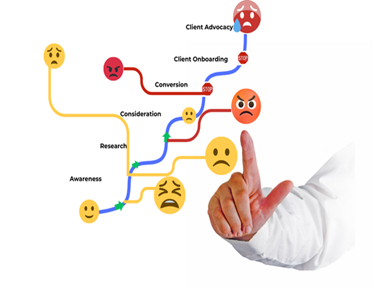
Marketing Out-of-Synch
Disconnected pieces create friction at the exact moments prospects need clarity.
 Mixed
Mixedmessages
The website says one thing, sales conversations say another, and follow-up materials introduce a third version of the story.
 Scattered
content
Useful assets sit across folders, inboxes, decks, and old campaigns without a clear role in the buyer journey.
 Underused
CRM
The CRM stores contacts, but it does not clearly show what people care about, what they have seen, or what should happen next.
 AI without
context
AI tools can create more activity, but without a strategic foundation they can also create more noise.
Our Process
A focused path from strategy to measurable engagement.
01Define the strategy
Clarify the market, audience, positioning, and decision journey.
02Create the assets
Build the content and tools each audience needs at each stage.
03Wire the ecosystem
Connect assets to CRM/ERP signals, workflows, and reporting.
04Support the team
Use AI to monitor activity, recommend next actions, and measure progress.
The connected model will turn strategy into assets, assets into engagement, engagement into data, and data into next actions.
The new model
Your marketing team will have the support of a foundation-based system.
The foundation reports will define the market, audience, positioning, messaging, journey logic, content priorities, and engagement strategy. From that base, the system will help the team create the right assets, wire them into CRM/ERP execution, and use AI support to manage workflows, outcomes, and progress.
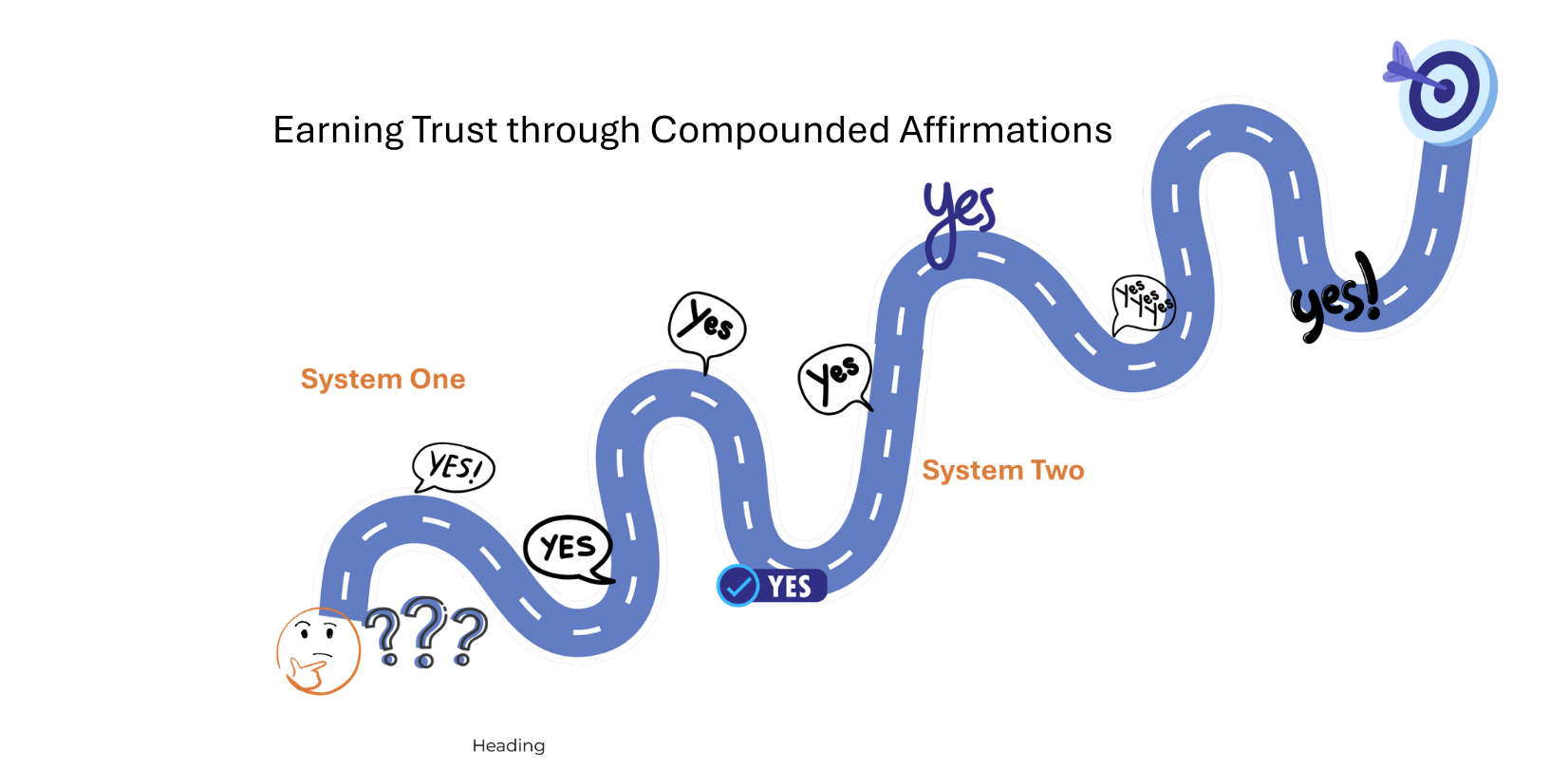
The connected version
Synchronized journeys that drive decisions.
The goal is to help the right person meet the right proof, in the right order, until the next step feels reasonable, useful, and clear.
The build sequence
A progressive build toward a sophisticated engagement system.
The sequence turns raw client knowledge into a usable marketing operating system. Each step creates the inputs needed for the next one.
Will establish the market reality, strategic substance, proof points, risks, terminology, and opportunity.
Will turn the research into positioning, voice, message guardrails, and approved language.
Will define who the ecosystem must move and what each audience will need to believe.
Will map stage-specific content needs from awareness through advocacy.
Will define campaigns, workflow logic, execution requirements, and operating rules.
Will organize content assets, naming rules, reusable IDs, and campaign packaging.
From strategy to asset production
From foundation to finished assets.
Once the foundation is clear, the system defines what needs to be created, how each asset should be built, where it belongs, and how it will be used inside the engagement ecosystem.
Brand Kit
The governing layer for look, feel, voice, tone, logo usage, colors, fonts, message guardrails, and reusable design standards.
Marketing Asset Creation Report
The build plan that selects the assets being created, explains why they matter, and gives production instructions for each one.
Marketing Asset Inventory
Rather than a static folder, the asset library serves as the functional inventory of reusable marketing materials the ecosystem will draw from, track, and deploy.
What the inventory can contain
Every finished asset will have a role, source, owner, stage, and next action.
Website system
Landing pages
Social profiles
Email templates
Newsletter templates
Podcast/video templates
Social post inventory
Email campaign sequences
Lead magnets
Thought leadership
Case studies
Sales enablement
Webinars/workshops
Proposal templates
Client reporting templates
Referral kits
CRM/ERP wiring files
AI agent instructions
Client file library
A working library for strategy, assets, campaigns, and wiring.
As the work is created, files will be organized by role instead of scattered across email threads, folders, and one-off attachments.
Core documents
Research, brand architecture, personas, journey mapping, ecosystem spine, and content architecture will live here.
Client-ready content
White papers, email templates, landing pages, social posts, articles, scripts, webinars, and sales tools will be organized here.
Execution packages
Campaign briefs, prospect lists, nurture paths, channel plans, CTAs, source references, and asset IDs will be stored here.
Operating map
Fields, stages, rules, tags, triggers, task logic, dashboards, and reporting requirements will be translated here.
Marketing asset creation
The asset library will be built from the strategy, not from guesswork.
Every asset will have a job in the sequence. It should know where the prospect is, what the prospect already understands, what they are not ready to hear yet, and what next action should feel reasonable.
Core assets will include
- Brand and positioning playbook
- Website system
- One-page firm overview
- Capabilities or pitch deck
- Audience-specific landing pages
- Signature insight or white paper
- Email and nurture sequences
- Sales enablement and follow-up tools
Each asset will be governed by
- Audience and journey stage
- Approved positioning language
- Claims discipline and proof boundaries
- Reusable asset IDs
- Source document references
- Campaign role and CRM/ERP trigger logic
- Next best action
- Assumptions that still need review
From strategy to execution
Wiring your ecosystem for execution.
Your CRM should be more than a place to store contacts. It should help your team understand who people are, what they care about, what they have already seen, and what should happen next.
FieldsPersona, segment, stage, source, asset, campaign, readiness
RulesEnroll, route, score, notify, assign, recommend, follow up
CampaignsEmail, social, webinar, landing page, sales sequence
ReportingEngagement, stage movement, asset performance, next action
The third leg
AI-driven automation and workflow management.
Once the documents, assets, and CRM/ERP wiring exist, the agent can help monitor activity, classify engagement, recommend next actions, summarize progress, and keep the ecosystem aligned with the roadmap.
Track form submissions, asset engagement, campaign responses, booking activity, and stalled opportunities.
Suggest follow-up, content, task routing, workflow updates, and engagement priorities.
Summarize activity, preserve source logic, and keep the team aligned around what has happened and what should happen next.
 Measure progress
Help translate marketing activity into visible movement, outcomes, and decisions.
Why this matters
A custom operating system for growth.
Most organizations already have marketing assets, technology, and expertise. What they often lack is a system that connects them.
This process will transform research, positioning, content, campaigns, CRM/ERP workflows, and AI into a coordinated ecosystem designed to turn expertise into visibility, engagement, pipeline, and measurable progress.